
Li Battery
In power backup and energy storage applications across commercial buildings, industrial facilities, and critical infrastructure, traditional lead-acid and outdated battery systems often fall short — offering limited lifespan, inconsistent performance, frequent maintenance needs, and increasing total cost of ownership. The Li Battery solution by Intelux solves these challenges with advanced lithium-ion battery technology engineered for high energy density, reliable power delivery, and long cycle life. Designed for uninterruptible power supply (UPS) systems, telecom sites, renewable energy storage, and hybrid DC power platforms, this commercial Li-ion battery delivers efficient energy storage, superior charge/discharge stability, compact design, and reduced maintenance, making it an ideal choice for facility managers, power consultants, and EPC decision makers focused on performance, safety, and long-term operational value.
Construction Details:
Intelux Li batteries are housed in robust enclosures made of high-grade steel or ABS plastic depending on the model and environment. Configurations include 19″ rack-mount. Advanced passive cooling and thermal shielding ensure performance stability without the need for active fans. Modular design enables easy scaling of energy capacity by parallel connecting multiple battery units.
Benefits:
- High Energy Storage: Supports continuous current flow in switching circuits.
- Safe, high energy density and high cycling life
- Innovative anti-theft function.
- It a good cycling life.
- Reliable protection.
- Easy deployment.
- Long service life
- Supporting large current discharging
- Durable Design: Withstands vibration, thermal cycling, and overload conditions
In contemporary commercial environments with limited ceiling depth, bulky lighting fixtures can disrupt design aesthetics, reduce usable space, and contribute to uneven illumination and visual discomfort. The Antero Slim 2×2 – ANTERO ULTRA LED Panel Light by Intelux solves these challenges with its ultra-thin architectural profile and high-performance LED technology, delivering uniform, glare-free illumination that enhances comfort and efficiency. Engineered for modern offices, premium retail spaces, hospitals, and conference rooms, this slim commercial LED panel light replaces conventional recessed fixtures with reliable performance, longer service life, and lower operating costs — all while maintaining a minimalistic, elegant ceiling appearance.
Models:
- IBLS-241-24-65-1-DP-ST 24W
- IBLS-241-36-65-1-DP-ST 36W
- IBLS-241-40-65-1-DP-ST 24W
Construction Details:
It is constructed with a high-transmittance PMMA/Polycarbonate diffuser that provides uniform, soft, and glare-free light output. The ultra-slim housing is made from premium powder-coated aluminium for excellent strength, lightweight performance, and effective heat dissipation. High-efficiency SMD LED modules ensure consistent brightness and superior luminous efficacy. The panel is powered by a constant current, high-efficiency isolated LED driver with in-built surge protection for maximum electrical safety. An optimized internal thermal management system ensures efficient heat dissipation, significantly extending LED life. The luminaire is finished with a premium matte white coating for a clean and modern architectural appearance.
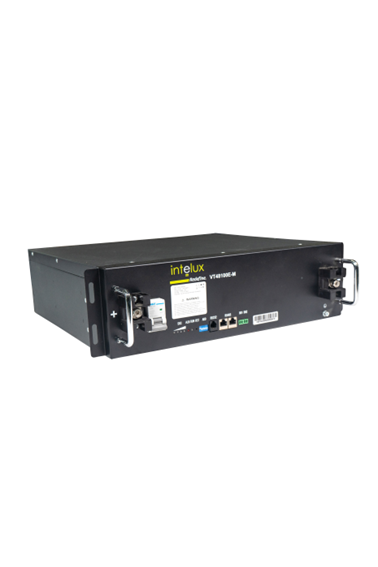
| Parameter | Specification |
| Nominal Voltage | 48V DC |
| Capacity Options | 50Ah, 100Ah, 150Ah, 200Ah+ (model dependent) |
| Battery Chemistry | LiFePO₄ |
| Cycle Life | ≥ 3500 cycles@80%DOD, 35”C), |
| Charge Voltage | 52.5 V to 54 V |
| Discharge Cutoff Voltage | 40 V to 52.5 V |
| Max Charging Current | Up to 100A (depending on model) |
| Discharge Temperature range | –20°C to +55°C |
| Charge Temperature range | 0°C to +55°C |
| Storage Temperature range | 0°C to +40°C |
| Self-discharging | ≤5% (90days storage) |
| Altitude | 0m to 4000m |
| Communication Interface | Modbus, SNMP |
| Protection | Overcharge, over-discharge, short circuit, temp |
| Enclosure | Metal or ABS (IP20–IP55, model dependent) |
Applications:
- Telecom Base Transceiver Stations (BTS)
- Remote/off-grid solar hybrid telecom sites
- Indoor and outdoor telecom shelters
- Network edge equipment and PoP locations
- Emergency telecom power backup systems